'/%3e%3crect%20x='-83'%20y='270'%20width='356'%20height='136'%20fill='%23FF6600'/%3e%3cpath%20d='M564%20260Q616%20260%20648.5%20277.0Q681%20294%20697.5%20311.5Q714%20329%20716%20333H724V270H895V800H724V737H716Q714%20741%20697.5%20759.0Q681%20777%20648.5%20793.5Q616%20810%20564%20810Q506%20810%20463.0%20786.5Q420%20763%20391.0%20723.5Q362%20684%20348.0%20635.0Q334%20586%20334%20535Q334%20484%20348.0%20435.0Q362%20386%20391.0%20346.5Q420%20307%20463.0%20283.5Q506%20260%20564%20260ZM618%20397Q581%20397%20556.0%20417.5Q531%20438%20519.0%20469.5Q507%20501%20507%20535Q507%20569%20519.0%20600.5Q531%20632%20556.0%20652.5Q581%20673%20618%20673Q655%20673%20679.5%20652.5Q704%20632%20716.5%20600.5Q729%20569%20729%20535Q729%20501%20716.5%20469.5Q704%20438%20679.5%20417.5Q655%20397%20618%20397Z'%20fill='%23FFFFFF'/%3e%3cpath%20d='M1329%20810Q1278%20810%201245.0%20793.0Q1212%20776%201196.0%20758.5Q1180%20741%201178%20737H1170V800H999V40H1170V333H1178Q1180%20329%201196.0%20311.0Q1212%20293%201245.0%20276.5Q1278%20260%201329%20260Q1388%20260%201431.0%20283.5Q1474%20307%201502.5%20346.5Q1531%20386%201545.5%20435.0Q1560%20484%201560%20535Q1560%20586%201545.5%20635.0Q1531%20684%201502.5%20723.5Q1474%20763%201431.0%20786.5Q1388%20810%201329%20810ZM1276%20673Q1313%20673%201338.0%20652.5Q1363%20632%201375.0%20600.5Q1387%20569%201387%20535Q1387%20501%201375.0%20469.5Q1363%20438%201338.0%20417.5Q1313%20397%201276%20397Q1239%20397%201214.0%20417.5Q1189%20438%201177.0%20469.5Q1165%20501%201165%20535Q1165%20569%201177.0%20600.5Q1189%20632%201214.0%20652.5Q1239%20673%201276%20673Z'%20fill='%23FFFFFF'/%3e%3cpath%20d='M1664%20800V270H1835V800Z'%20fill='%23FFFFFF'/%3e%3crect%20x='1664.0'%20y='40'%20width='171'%20height='171'%20fill='%23FF6600'/%3e%3cpath%20d='M1945%20800V270H2116V345H2121Q2131%20329%202148.5%20309.0Q2166%20289%202195.5%20274.5Q2225%20260%202269%20260Q2333%20260%202371.5%20289.0Q2410%20318%202427.0%20362.5Q2444%20407%202444%20454V800H2273V486Q2273%20452%202255.0%20425.5Q2237%20399%202196%20399Q2151%20399%202133.5%20428.5Q2116%20458%202116%20493V800Z'%20fill='%23FFFFFF'/%3e%3cpath%20d='M2792%20810Q2724%20810%202684.5%20789.0Q2645%20768%202627.0%20736.5Q2609%20705%202604.0%20672.5Q2599%20640%202599%20617V406H2511V270H2599V139H2770V270H2878V406H2770V612Q2770%20642%202786.5%20659.5Q2803%20677%202843%20677Q2860%20677%202873.0%20674.5Q2886%20672%202886%20672V800Q2886%20800%202857.5%20805.0Q2829%20810%202792%20810Z'%20fill='%23FFFFFF'/%3e%3cpath%20d='M3236%20810Q3165%20810%203113.0%20786.5Q3061%20763%203026.5%20723.5Q2992%20684%202975.5%20635.0Q2959%20586%202959%20534Q2959%20484%202975.0%20435.0Q2991%20386%203024.0%20346.5Q3057%20307%203108.5%20283.5Q3160%20260%203231%20260Q3307%20260%203364.5%20292.5Q3422%20325%203454.5%20387.5Q3487%20450%203487%20539V579H3131Q3134%20620%203160.5%20650.5Q3187%20681%203236%20681Q3273%20681%203292.5%20667.5Q3312%20654%203319.0%20640.0Q3326%20626%203326%20626H3483Q3483%20626%203478.0%20644.5Q3473%20663%203459.0%20690.5Q3445%20718%203418.0%20745.5Q3391%20773%203346.5%20791.5Q3302%20810%203236%20810ZM3130%20480H3323Q3321%20433%203294.5%20409.0Q3268%20385%203228%20385Q3189%20385%203161.5%20409.0Q3134%20433%203130%20480Z'%20fill='%23FFFFFF'/%3e%3cpath%20d='M3585%20800V40H3756V800Z'%20fill='%23FFFFFF'/%3e%3c/svg%3e)
What a sheet-metal part actually costs — the 2026 pricing guide
No job shop can publish a price list, because no two parts are the same. So here is the next best thing: the whole cost model, with our own material prices, worked through a real part, and a look at the instant quoting tool we are building.
Why nobody publishes a price list
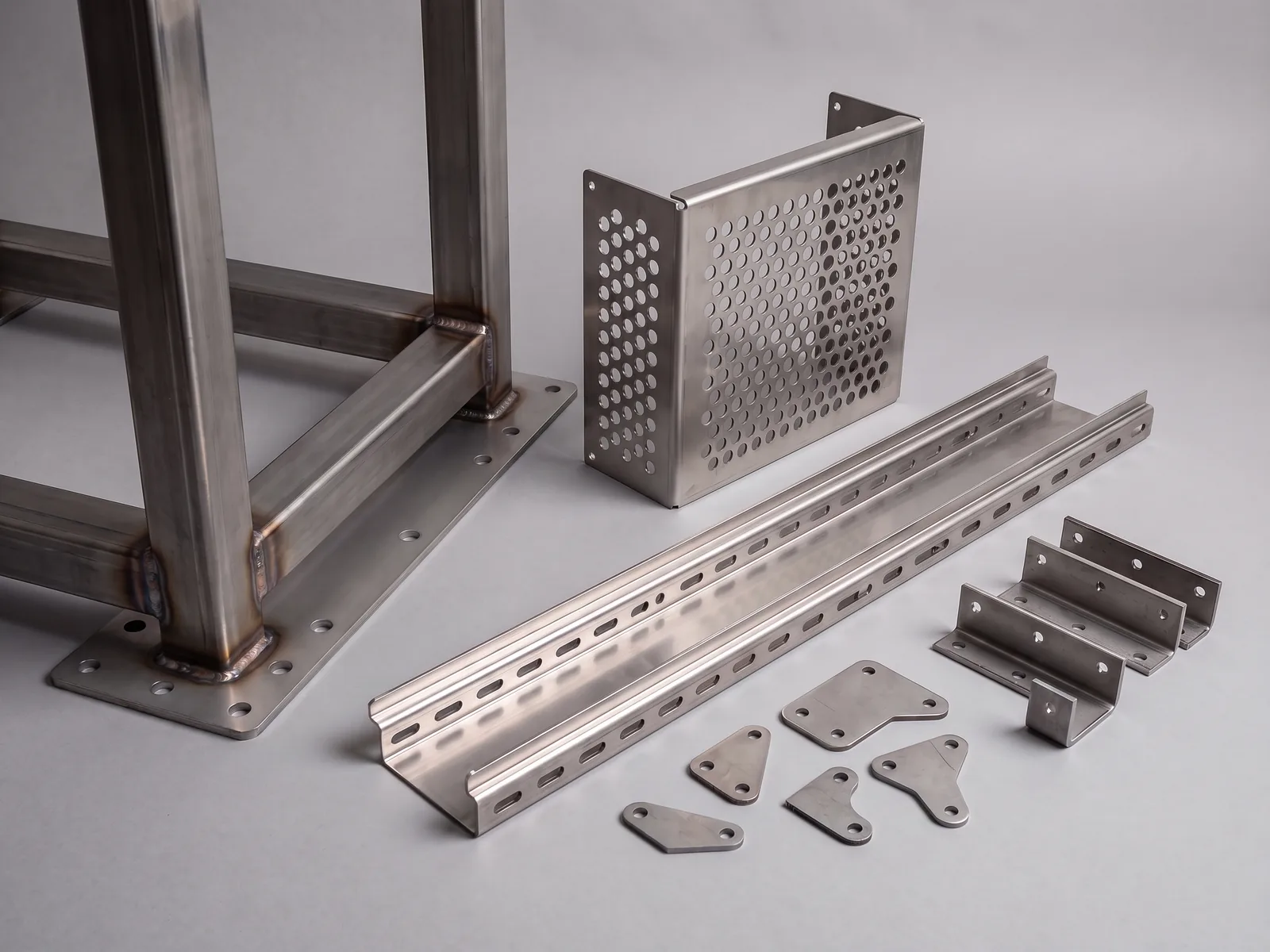
Ask five fabricators what a bracket costs and you will get five versions of “send us the drawing”. That is not evasion — a price list would be a lie. The same 400 × 300 outline can differ tenfold in price depending on thickness, grade, bend count, finish and how many you need. What we can publish is the model underneath: the five things you pay for, what moves each one, and a real part worked all the way through.
Read it and you should be able to predict roughly where your own part lands before you talk to anyone — and, more usefully, see which decisions on your drawing are quietly expensive.
The five things you are paying for
| Component | What actually drives it |
|---|---|
| Material | Sheet consumed, not your part outline. A part that nests badly can burn 40% more steel than its own area. |
| Cutting | Cut length plus pierce count, at a machine rate. Thickness slows the head non-linearly — doubling thickness more than doubles cut time. |
| Forming | Number of bends × hits on the brake, plus tool setup. A part needing three tool changes costs more than one with three identical bends. |
| Secondary | Welding, powder coat or plating, inserted hardware. Often the largest single line on a finished part. |
| Setup & programming | Nesting, program, first-article check. Fixed per job — which is why quantity moves the unit price so hard. |
Everything below is these five, in different proportions.
A part, worked all the way through
Take a folded bracket — a 400 × 300 mm flat blank in 2 mm mild steel, four bends, powder coated, fifty off. The material line is not an estimate: it is our own weekly material price, applied to the sheet the part actually consumes.
| Step | Working |
|---|---|
| Blank | 400 × 300 × 2 mm |
| Mass | × 7,850 kg/m³ (mild steel) |
| Sheet consumed | ÷ 0.78 nesting utilisation |
| Material cost | × our weekly material price = ≈ 55,000 ₫ |
Note the third line. You are billed for the sheet the part consumes, including the web around it — which is why nesting is a price lever, not a technicality.
| Component | Share | This part |
|---|---|---|
| Material | 30% | ≈ 55,000 ₫ |
| Cutting | 20% | ≈ 37,000 ₫ |
| Forming (4 bends) | 15% | ≈ 28,000 ₫ |
| Powder coat | 25% | ≈ 46,000 ₫ |
| Setup, amortised over 50 | 10% | ≈ 18,000 ₫ |
| Per part | 100% | ≈ 185,000 ₫ |
The material figure is real, at our own material prices. The split between operations is a typical proportion for this class of part, shown so you can see the shape — it is not a rate card and your part will sit somewhere else on it.
Change one word on the drawing
Now write “inox 304” on the same drawing. Nothing else changes — same outline, same four bends, same coating, same fifty off. Only the material line moves, and it moves a long way.
| Grade | Material in this part | Part total | Material share |
|---|---|---|---|
| Mild steel | ≈ 55,000 ₫ | ≈ 185,000 ₫ | 30% |
| Inox 201 | ≈ 129,000 ₫ | ≈ 258,000 ₫ | 50% |
| Inox 304 | ≈ 199,000 ₫ | ≈ 328,000 ₫ | 61% |
| Aluminium 1050 | ≈ 105,000 ₫ | ≈ 235,000 ₫ | 45% |
Material at our own material prices (ex-VAT, informative, refreshed weekly). Operation costs held constant, so the difference is purely grade.
Quantity is the other big lever
Setup does not care how many you order. Nesting, programming and the first-article check cost the same for one part as for a thousand — so on a single piece you carry the whole thing, and by a hundred it has almost vanished.
| Quantity | Unit price index | What is happening |
|---|---|---|
| 1 | 100 | You are paying the entire setup yourself |
| 10 | 28 | Setup split ten ways; the drop is steepest here |
| 50 | 22 | Setup nearly amortised — the curve flattens |
| 100 | 21 | Now essentially paying material + operations |
| 1,000 | 20 | Flat. Further savings come from nesting and stock, not setup |
An index, not prices — qty 1 set to 100, assuming setup is four times the per-part variable cost. Your ratio will differ; the shape will not.
This is why a prototype feels disproportionately expensive, and why “can you quote 1 and 100?” is always worth asking. It is also why splitting one order into three deliveries costs more than it looks — each run may carry its own setup.
What you control
- 01 Order in batches, not dribs The steepest part of the curve is between 1 and 10. Consolidating a year of small orders into two runs is usually the largest single saving available to you.
- 02 Pick the grade for a reason A 3.5× per-kilo difference between mild steel and 304 dwarfs almost every other decision on the drawing.
- 03 Let the part nest Rectangular-ish outlines interlock; long thin diagonals waste the web around them. Ask us before you finalise an awkward outline.
- 04 Do not over-specify tolerance Standard cut tolerance is ±0.10 mm and costs nothing extra. Demanding tighter on features that do not need it adds inspection and scrap.
- 05 Keep bends consistent Same radius and same direction where you can — every tool change is setup time you pay for.
- 06 Choose the finish deliberately Powder coat, hot-dip galvanizing and electroplated zinc have very different costs and very different lifespans. Match it to where the part lives.
Soon: the same number, in seconds
Everything above is a model you have to apply by hand. We are building the thing that applies it for you: upload a DXF or STEP and get the price back immediately, with the breakdown showing — no email, no waiting for someone to open your file.
The point is not speed for its own sake. It is that you can iterate. Change 2 mm to 1.5 mm and watch the number move. Try 201 instead of 304. Ask what fifty costs against ten. Every lever this article describes becomes something you can pull yourself, in the moment you are still deciding — instead of a second email and another day gone.
- 01 Read the geometry Cut length, pierce count, bend lines and hole sizes straight off the DXF or STEP — the inputs you would otherwise have to describe in an email.
- 02 Nest it Fit your quantity onto stock sheet and report what it actually consumes, so the material line reflects the sheet you buy rather than the outline you drew.
- 03 Price the operations Cutting, forming and finish, against the same five components set out above.
- 04 Show its working The breakdown, not just a total — so you can see which line dominates and what to change.
It is not live yet. Until it is, the 24-hour quote is the fast path — and if you send us a drawing now, we will tell you when the instant version opens.
What we cannot price from a photo
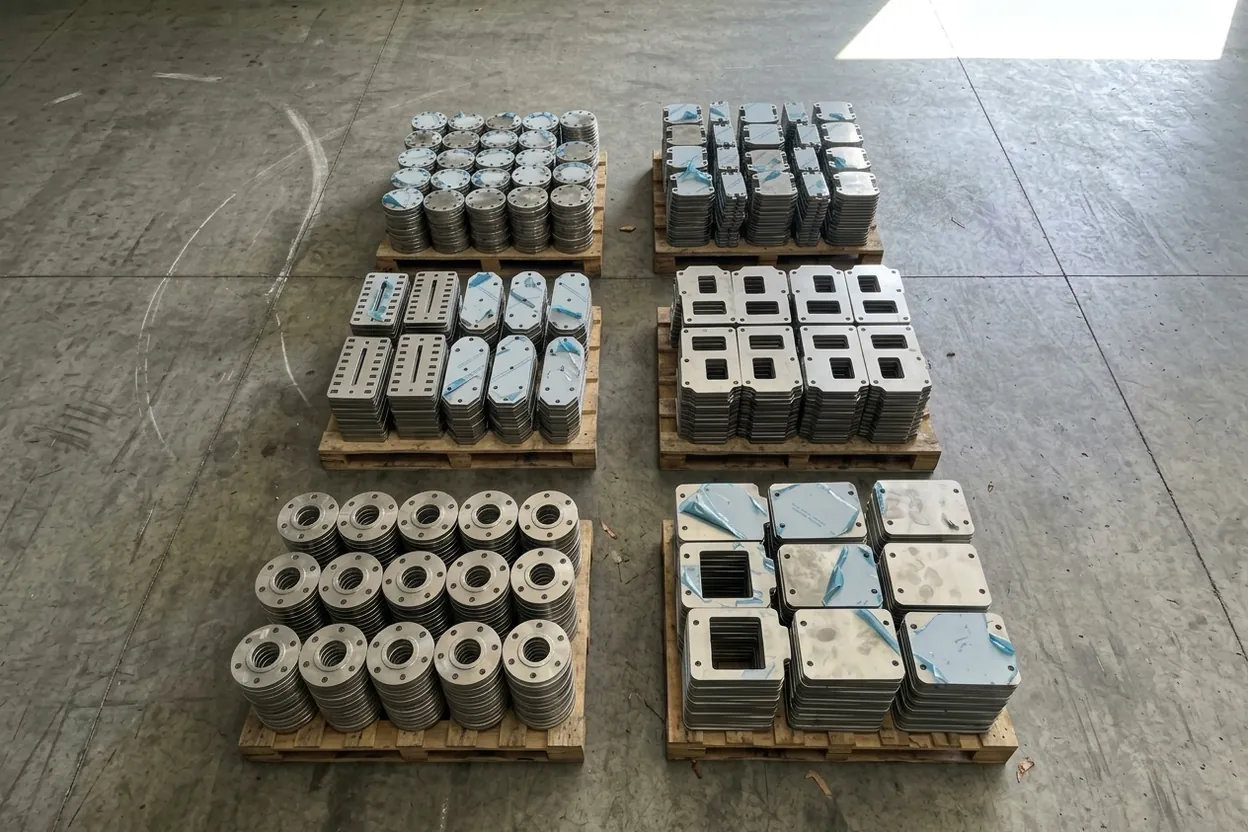
Everything above is the model. To turn it into a number we need the things the model takes as input — and a photo carries none of them.
| Send | Why it changes the price |
|---|---|
| DXF or STEP | Cut length, pierce count and how the part nests all come from the geometry |
| Thickness and grade | The largest single line in most quotes |
| Quantity, and whether it repeats | Sets how the setup is amortised |
| Finish | Coating or plating is often a quarter of the part |
| Tolerances that actually matter | Tells us where to spend inspection, and where not to |
Design and CAD/CAM programming at LASER Tuấn Thịnh.
All notes by Khang →Keep reading
All notes →Send the drawing, get the real number
Everything above is the model. Your part has a thickness, a grade, a bend count and a quantity — send a DXF or STEP and we price it properly, usually inside 24 hours. Ask us to flag you when the instant version goes live and we will.