'/%3e%3crect%20x='-83'%20y='270'%20width='356'%20height='136'%20fill='%23FF6600'/%3e%3cpath%20d='M564%20260Q616%20260%20648.5%20277.0Q681%20294%20697.5%20311.5Q714%20329%20716%20333H724V270H895V800H724V737H716Q714%20741%20697.5%20759.0Q681%20777%20648.5%20793.5Q616%20810%20564%20810Q506%20810%20463.0%20786.5Q420%20763%20391.0%20723.5Q362%20684%20348.0%20635.0Q334%20586%20334%20535Q334%20484%20348.0%20435.0Q362%20386%20391.0%20346.5Q420%20307%20463.0%20283.5Q506%20260%20564%20260ZM618%20397Q581%20397%20556.0%20417.5Q531%20438%20519.0%20469.5Q507%20501%20507%20535Q507%20569%20519.0%20600.5Q531%20632%20556.0%20652.5Q581%20673%20618%20673Q655%20673%20679.5%20652.5Q704%20632%20716.5%20600.5Q729%20569%20729%20535Q729%20501%20716.5%20469.5Q704%20438%20679.5%20417.5Q655%20397%20618%20397Z'%20fill='%23FFFFFF'/%3e%3cpath%20d='M1329%20810Q1278%20810%201245.0%20793.0Q1212%20776%201196.0%20758.5Q1180%20741%201178%20737H1170V800H999V40H1170V333H1178Q1180%20329%201196.0%20311.0Q1212%20293%201245.0%20276.5Q1278%20260%201329%20260Q1388%20260%201431.0%20283.5Q1474%20307%201502.5%20346.5Q1531%20386%201545.5%20435.0Q1560%20484%201560%20535Q1560%20586%201545.5%20635.0Q1531%20684%201502.5%20723.5Q1474%20763%201431.0%20786.5Q1388%20810%201329%20810ZM1276%20673Q1313%20673%201338.0%20652.5Q1363%20632%201375.0%20600.5Q1387%20569%201387%20535Q1387%20501%201375.0%20469.5Q1363%20438%201338.0%20417.5Q1313%20397%201276%20397Q1239%20397%201214.0%20417.5Q1189%20438%201177.0%20469.5Q1165%20501%201165%20535Q1165%20569%201177.0%20600.5Q1189%20632%201214.0%20652.5Q1239%20673%201276%20673Z'%20fill='%23FFFFFF'/%3e%3cpath%20d='M1664%20800V270H1835V800Z'%20fill='%23FFFFFF'/%3e%3crect%20x='1664.0'%20y='40'%20width='171'%20height='171'%20fill='%23FF6600'/%3e%3cpath%20d='M1945%20800V270H2116V345H2121Q2131%20329%202148.5%20309.0Q2166%20289%202195.5%20274.5Q2225%20260%202269%20260Q2333%20260%202371.5%20289.0Q2410%20318%202427.0%20362.5Q2444%20407%202444%20454V800H2273V486Q2273%20452%202255.0%20425.5Q2237%20399%202196%20399Q2151%20399%202133.5%20428.5Q2116%20458%202116%20493V800Z'%20fill='%23FFFFFF'/%3e%3cpath%20d='M2792%20810Q2724%20810%202684.5%20789.0Q2645%20768%202627.0%20736.5Q2609%20705%202604.0%20672.5Q2599%20640%202599%20617V406H2511V270H2599V139H2770V270H2878V406H2770V612Q2770%20642%202786.5%20659.5Q2803%20677%202843%20677Q2860%20677%202873.0%20674.5Q2886%20672%202886%20672V800Q2886%20800%202857.5%20805.0Q2829%20810%202792%20810Z'%20fill='%23FFFFFF'/%3e%3cpath%20d='M3236%20810Q3165%20810%203113.0%20786.5Q3061%20763%203026.5%20723.5Q2992%20684%202975.5%20635.0Q2959%20586%202959%20534Q2959%20484%202975.0%20435.0Q2991%20386%203024.0%20346.5Q3057%20307%203108.5%20283.5Q3160%20260%203231%20260Q3307%20260%203364.5%20292.5Q3422%20325%203454.5%20387.5Q3487%20450%203487%20539V579H3131Q3134%20620%203160.5%20650.5Q3187%20681%203236%20681Q3273%20681%203292.5%20667.5Q3312%20654%203319.0%20640.0Q3326%20626%203326%20626H3483Q3483%20626%203478.0%20644.5Q3473%20663%203459.0%20690.5Q3445%20718%203418.0%20745.5Q3391%20773%203346.5%20791.5Q3302%20810%203236%20810ZM3130%20480H3323Q3321%20433%203294.5%20409.0Q3268%20385%203228%20385Q3189%20385%203161.5%20409.0Q3134%20433%203130%20480Z'%20fill='%23FFFFFF'/%3e%3cpath%20d='M3585%20800V40H3756V800Z'%20fill='%23FFFFFF'/%3e%3c/svg%3e)
Prototype to production: what changes between 1 and 1,000
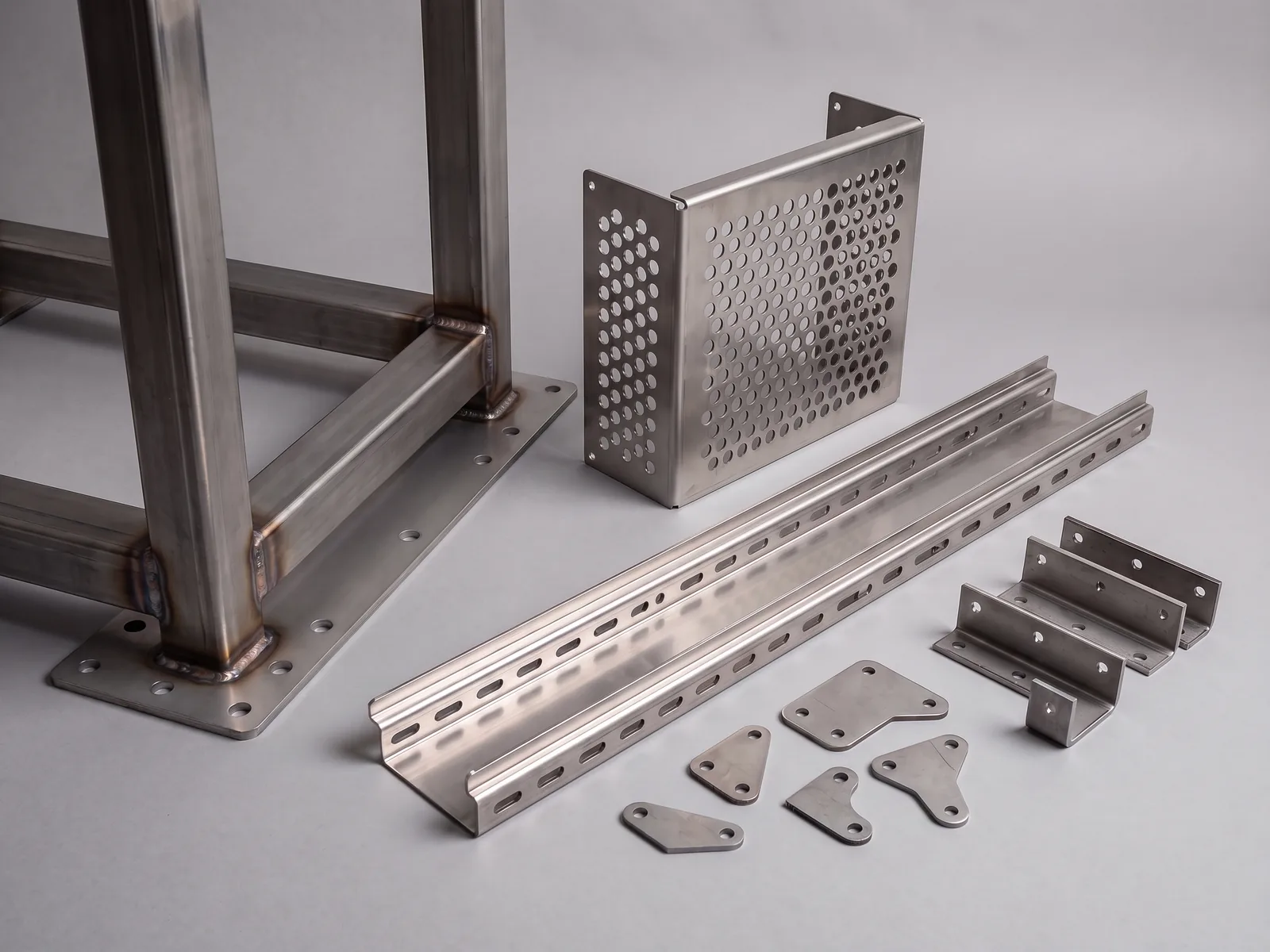
The one you approved was hand-made, hand-finished, hand-fettled. The thousandth can’t be. What scales, what doesn’t, and how to design so part 1,000 is as good as part 1.
The prototype lies a little
The sample you approved got treatment the run never will. Someone eased a sharp corner by hand, nudged a bend a degree to make it fit, buffed out a mark before it went in the box. A prototype is one part with a person’s full attention. Production is a thousand parts that have to come out right with none of it — from the tool, not the touch-up.
What changes at volume
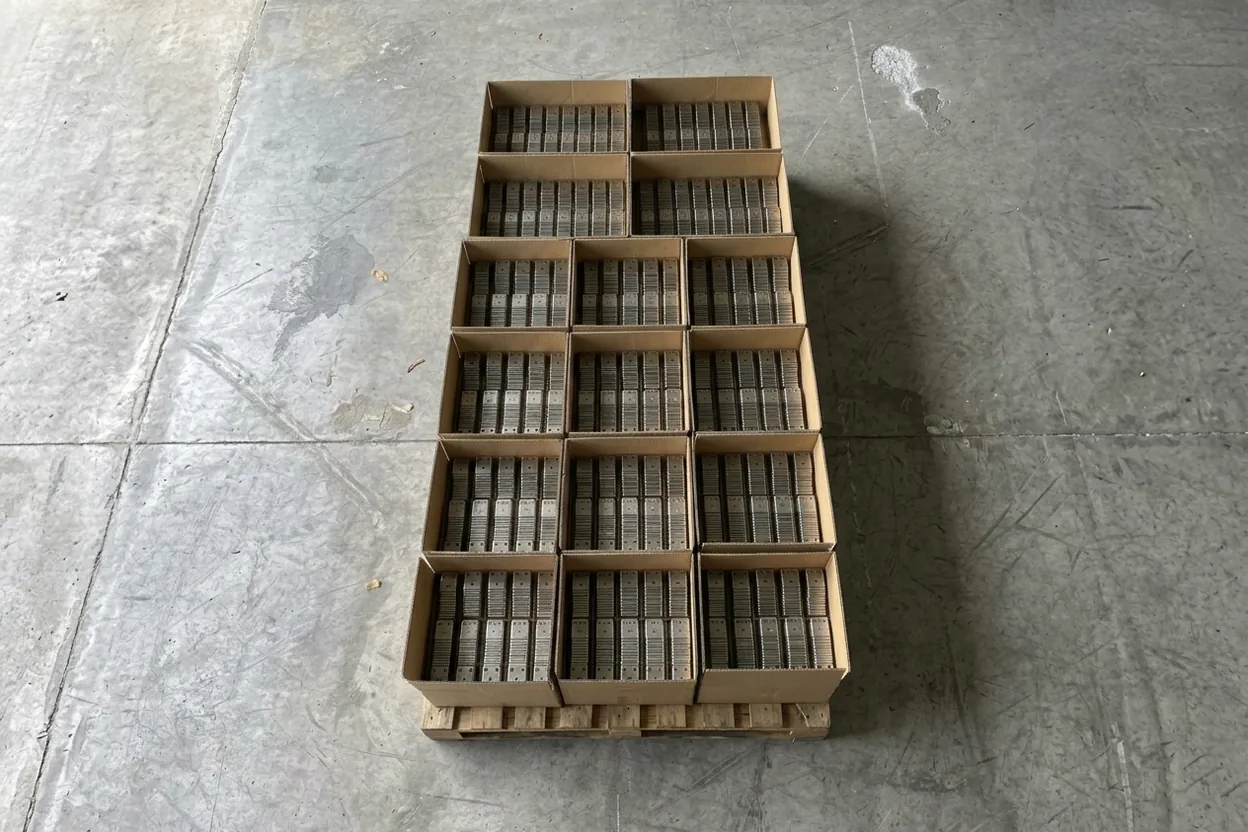
At quantity, the questions stop being "can we make one?" and become "can we make every one the same, fast?" Nesting to save sheet matters. Repeatable bends off a hard stop, not a hand-line, matter. A fixture that locates the part the same way every time matters. The one-off didn’t need any of that; the run lives or dies on it.
| PROTOTYPE | PRODUCTION | |
|---|---|---|
| What matters | Does it work? | Does every one work? |
| Fit-up | Fettled by hand | Held by a fixture |
| Tolerance | One part, checked | Repeatable across the run |
| Finishing | Touched up | Right off the line |
| Cost driver | Setup time | Cycle time × quantity |
The design that’s cheapest to prototype is rarely the one that’s cheapest to run — and vice versa.
Design for the thousandth part
A feature that’s a two-minute hand-tweak on the prototype becomes a two-minute tax on every part — times a thousand. Generous inside radii, self-locating tabs, features that can’t be assembled backwards, tolerances loose everywhere except where they truly matter: these cost nothing to draw and save hours across a run. The best time to design for volume is before the prototype, not after the reorder.
Tell us the real quantity early
We make genuinely different choices for a batch of 5 than for 5,000 — how we nest, whether we cut a fixture, which finish throughput we plan for. Tell us where the part is headed and we’ll build the job for that, not re-engineer it in a panic when the reorder lands.
“The cheapest production run is the one we knew was coming while we were still making the first one.”
Design and CAD/CAM programming at LASER Tuấn Thịnh.
All notes by Khang →Keep reading
All notes →Scaling a proven part?
Tell us the real quantity and we’ll re-engineer the job for the run — nesting, fixtures and tolerance that hold from part 1 to part 1,000.