
Stainless and steel sheet bending in Bình Dương
LASER Tuấn Thịnh bends stainless and steel sheet to your drawing at its shop in Thủ Dầu Một, Bình Dương: four press brakes from 36 to 250 tonnes, bends up to 6 m long, quoted within 24 hours. The 250-tonne CNC brake has a 6-axis back-gauge and CNC crowning and runs offline programs, so the first part and the thousandth come off at the same angle.

What the press brakes handle
Four press brakes: an Accurl 250 t over 4 m with a 6-axis back-gauge and CNC crowning, an Accurl 220 t over 6 m, an Amada 220 t over 4 m, and a 36 t brake for small parts at speed.
Bend sequences and collisions are checked in software from your 3D model before the brake ever moves.
In-cycle angle sensing plus adaptive crowning holds the angle across the full length — no dog-legging.
Gooseneck, acute, radius, hemming and offset tools cover box-ups, returns and tight returns in one setup.
By the hundred, or one of a kind
Programmed once, then bent by the hundred at the same angle — or folded into something no press was meant to make: origami, fan-pleats, faceted forms. If it unfolds to a flat pattern, we can bend it. Swipe the gallery.
Design it to bend clean
A few habits keep parts cheap, repeatable and dead-on angle. Send a flat pattern or a 3D model — we flag anything that won't form before it hits the brake.
Give flanges room
Keep a flange at least ~4× thickness tall, or it slips off the die and won't hold angle.
One radius, one tool
Draw the inside radius near one material thickness and reuse it — fewer tool changes, lower cost.
Relieve partial bends
Where a bend stops mid-edge, add a small relief slot so the metal tears clean instead of cracking.
Hold holes off the bend
Keep holes and slots ~2.5× thickness back from the bend line, or they pull into ovals.
What comes off the press brake
Bending is our specialty — formed parts across electrical, automotive, HVAC, architecture, food-grade, industrial, solar and signage work. Filter by industry, then open any photo full size and zoom in.
Tight, repeatable angles — a CNC back-gauge and crowning hold ±0.5° from the first part to the last.
Square, closed boxes — back-gauge and tooling square the box up so lids and mating parts just drop on.
Mark-free faces — urethane/film on the die and radius tools keep stainless and brushed faces clean.
Bent from your model — send a STEP or a flat pattern; we unfold, sequence and program it offline.
Products made with this process
Made in our shop to your size.
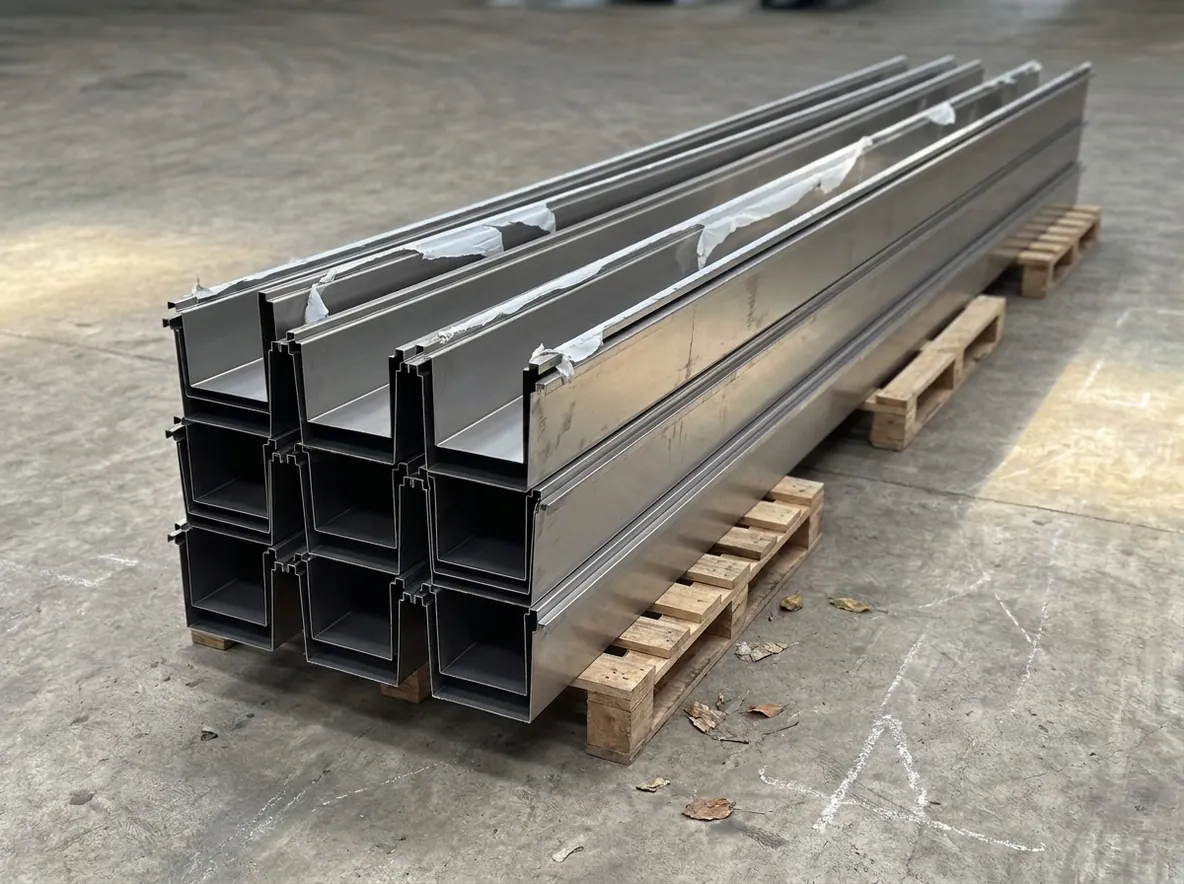 Construction Stainless gutters Folded from one sheet, up to 6 m, priced per metre. View product →
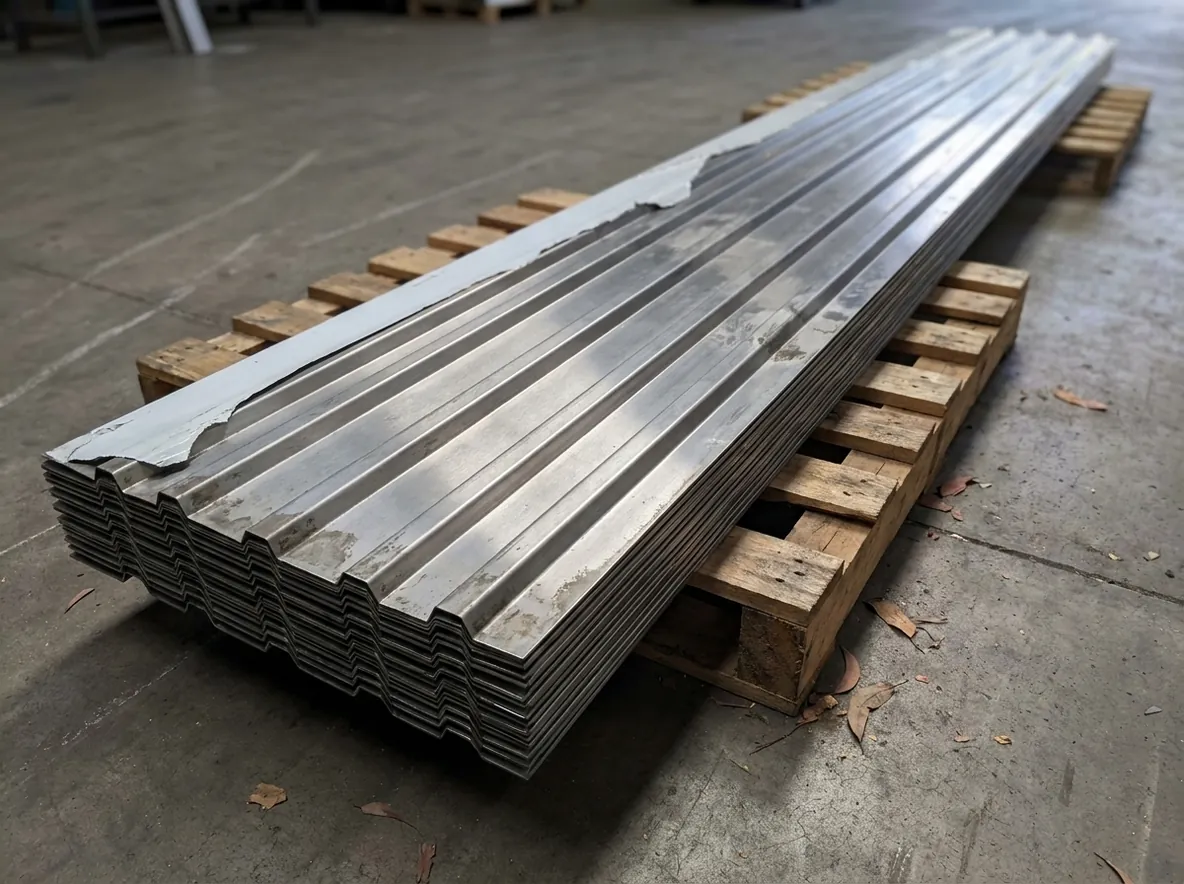 Transportation Truck body walls Ribbed walls for box trucks, drop-sides for open ones. View product →
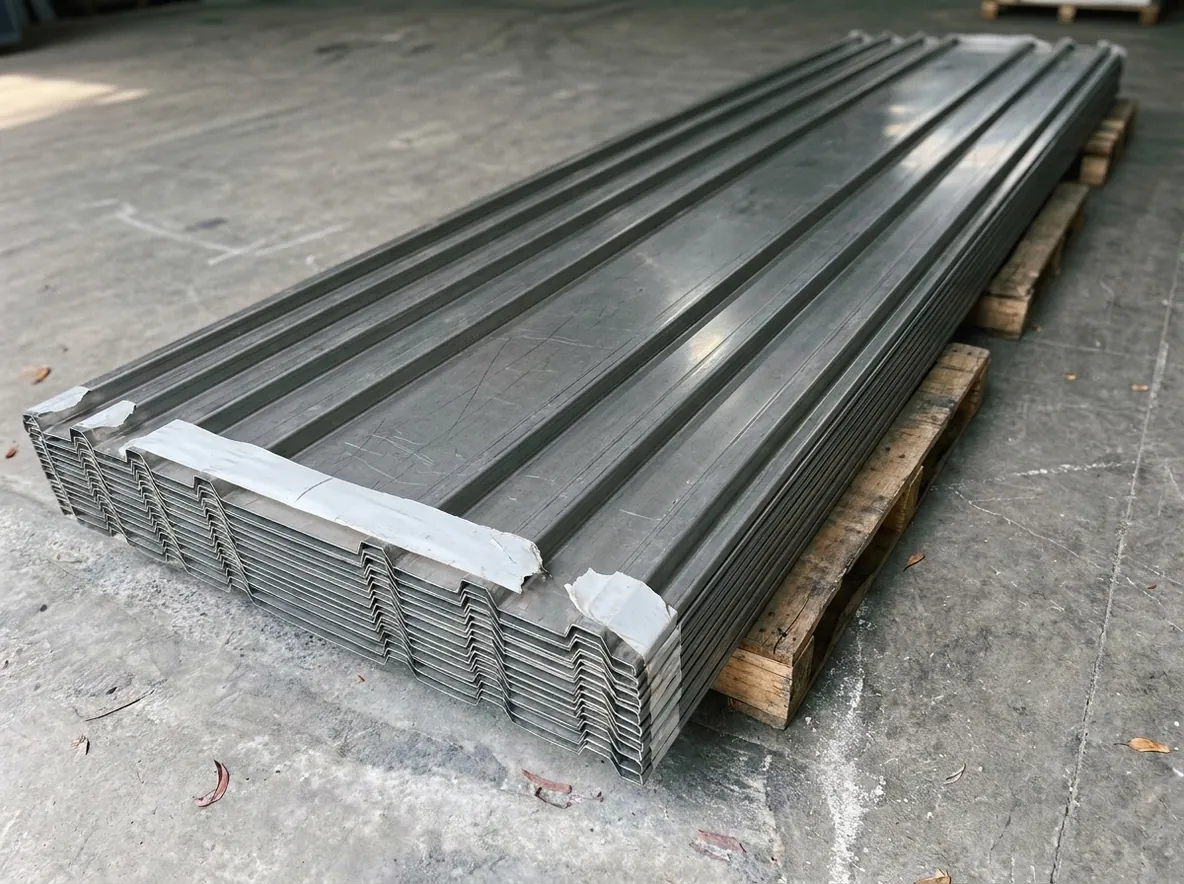 Transportation Truck bed floors Ribbed and chequer-plate floors, priced per m². View product →
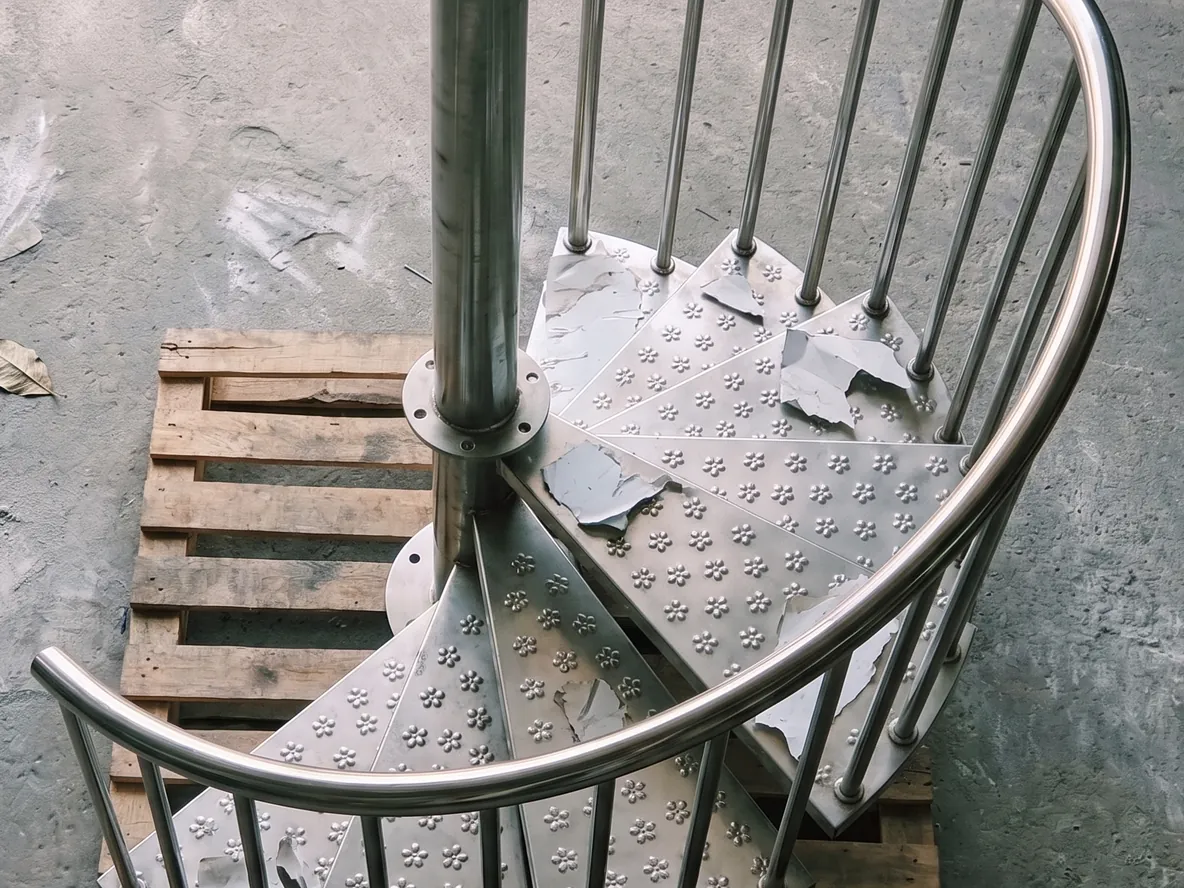 Construction Spiral staircases Kit stairs made to your floor height, priced per step. View product →
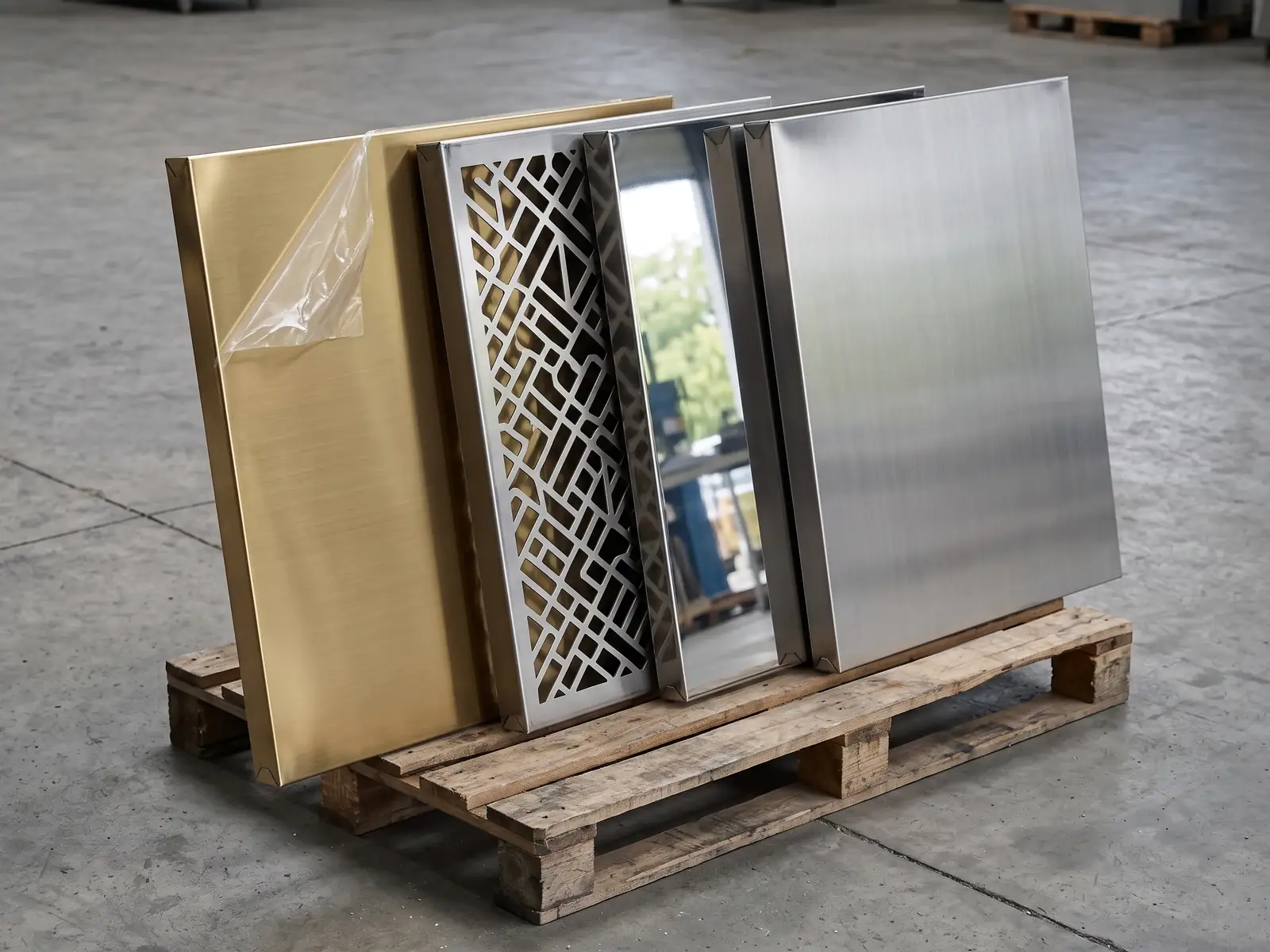 ILLUSTRATION Construction Stainless cladding Stainless 304 · Brushed, mirror, ripple, PVD colour View product →
Send your drawings. Get a price by tomorrow.
Attach files by email or Zalo if that's easier — same 24-hour promise either way.
Request a quote
Replies within one business day. Your files stay confidential — NDA on request.
Or call +84 948 684 939
Frequently asked questions
Send the drawing with your question — fastest way to a real answer.
01 How thick a sheet can you bend?
Steel up to 6 mm, stainless up to 4 mm and aluminium up to 8 mm, with bends up to 6 m long, on four press brakes from 36 to 250 tonnes.
02 Do you bend small quantities, even one piece?
Yes, from a single prototype to production runs. The bending program is written once, so the first part and the thousandth come out at the same angle.
03 What files do you need for bending?
A STEP model, a flat pattern as DXF, or a dimensioned drawing. Send a 3D model and we unfold it, plan the bend sequence and flag anything that cannot be bent before we quote. Quotes within 24 hours.
04 What tolerance do you hold on bends?
±0.2 mm on dimensions and ±0.5° on angles. The CNC back gauge and crowning keep the angle even along the whole bend, from the first part to the last.
05 Will bending mark stainless steel?
No. Urethane liners or film on the dies and punches keep stainless and brushed faces clean and free of marks.
06 What is the smallest bend radius?
An inside radius of about the material thickness. Flanges should be at least about 4 times the thickness, and holes about 2.5 times the thickness from the bend line so they do not distort.
07 Can you also cut the blanks, weld and coat?
Yes. Blanks are laser cut to ±0.1 mm in the shop and welded into assemblies after bending. Powder coating and galvanizing are done at partner plants, all on one order, with delivery nationwide.
The rest of the line
Got a flat pattern?We'll fold it.
Send a STEP model or a DXF flat — back in a priced, bend-checked quote, angles and all.