
Stainless tube bending in Bình Dương
Round and square tube bent on four hydraulic and manual benders, including the shop's first bender from 1998. Even radii with no flat spots, wrinkles or wall collapse, for frames and handrails to your drawing.
What we can bend
Round and square tube, down to a 2×D centreline radius and up to 180° a bend, on four hydraulic and manual benders — including the shop's first, from 1998.
A mandrel supports the bore through the bend, so tight radii come out round — no flat spots or collapse.
A wiper die trailing the bend kills the wrinkles thin-wall tube wants to fold on the inside radius.
Stops and angle gauges put every bend at the same angle and in the same plane, part after part.
By the hundred, or one of a kind
Set the bender once and run identical handrails, hoops and coils by the hundred — or bend a tube into something no one has before: knots, helices, woven spheres. If a line can follow it, we can bend it. Swipe the gallery.
Design it to bend true
A few habits keep tube bends round, repeatable and crack-free. Send a centreline model or a bend table — we flag anything that won't form before it hits the machine.
Keep the radius open
Design to a centreline radius of at least 2× the tube diameter — tighter needs a mandrel and costs more.
Leave straight to grip
Keep ~2× diameter of straight tube between bends (and at the ends) so the dies have something to clamp.
The outside thins
The outer wall stretches thinner through a bend — allow for it, or we run a mandrel on thin wall and tight radii.
Tube springs back
Metal relaxes a few degrees after bending — we over-bend to land the finished angle, tuned per material and radius.
What comes off the bender
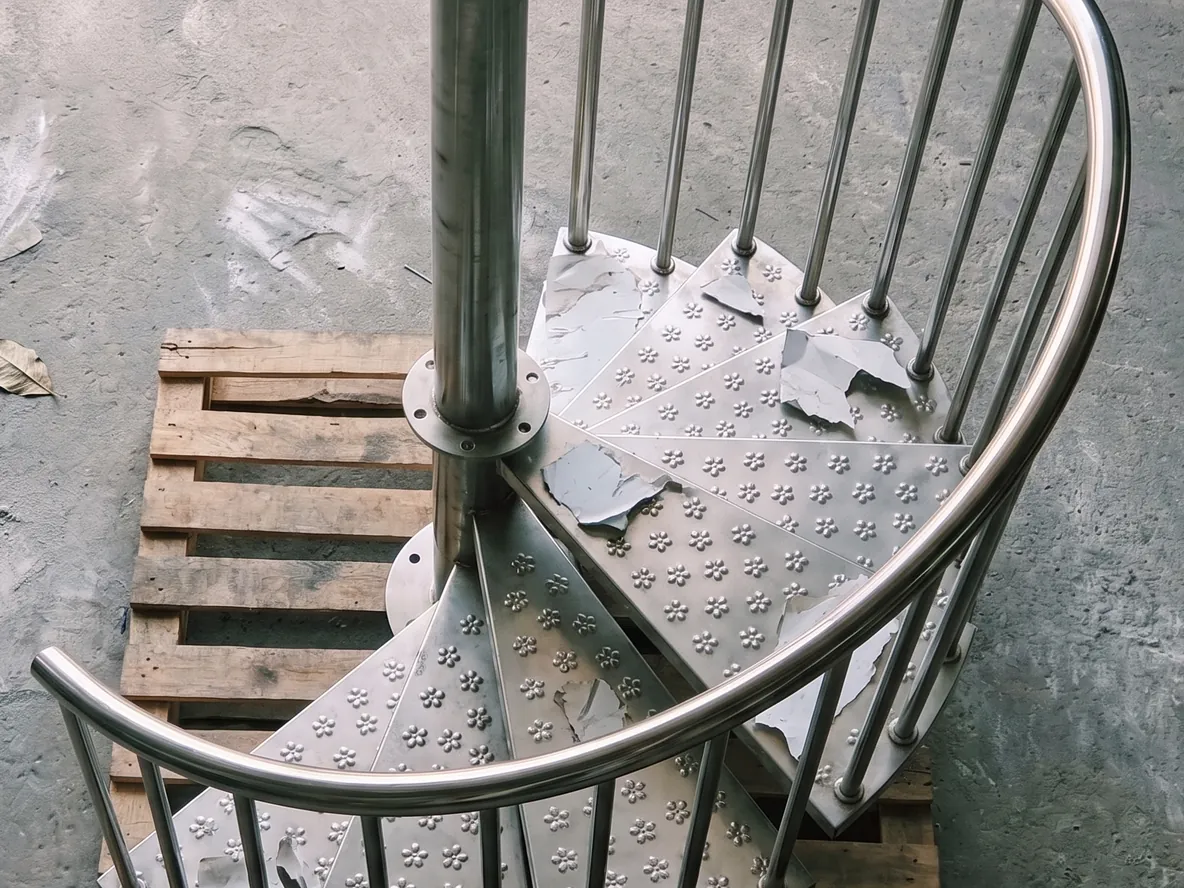
Bent tube across railing, automotive, furniture, industrial, HVAC, architecture and decorative work. Filter by industry, then open any photo full size and zoom in.
Round-section bends — mandrel-supported so tight radii stay round, with no flat spots or kinks.
Wrinkle-free inside — a wiper die keeps the inner radius smooth on thin-wall tube.
Repeatable geometry — programmed angle and rotation put every bend on the same plane, part after part.
Bent from your model — send a centreline (STEP/IGES) or a bend table; we set the machine from it.
Products made with this process
Made in our shop to your size.
Frequently asked questions
Send the drawing with your question — fastest way to a real answer.
01 What tubes can you bend?
Round and square tube in steel, stainless, aluminium, copper and brass, with walls up to 3 mm on round tube and 2 mm on square, on four hydraulic and manual benders.
02 What is the tightest bend radius?
A centreline radius of about 2 times the tube diameter, up to 180° per bend. Leave about 2 diameters of straight tube between bends so the die has something to clamp.
03 Will the tube dent or flatten when bent?
No. A mandrel inside the tube keeps the section round on tight radii, and a wiper die stops wrinkles on the inside of the bend on thin-wall tube. Metal springs back a few degrees, so we overbend slightly to land on the final angle.
04 What files do you need for tube bending?
A centreline model as STEP or IGES, a centreline DXF, or a bend table. We check the radii and angles and quote within 24 hours.
05 Do you bend small runs, handrails and frames to drawing?
Yes, from one piece to hundreds of identical handrails and loops. Angles and rotation are set once, so every bend sits in the same plane and every part matches.
06 Can you also cut, weld and coat the frame?
Yes. Tubes are laser cut with saddles and holes before or after bending, and bent frames are welded and ground clean in the shop. Powder coating is done at a partner plant, all on one order, with delivery nationwide.
The rest of the line
Got a bend to make?We'll shape it.
Send a centreline model or a bend table — back in a priced quote, radii and angles checked.
