'/%3e%3crect%20x='-83'%20y='270'%20width='356'%20height='136'%20fill='%23FF6600'/%3e%3cpath%20d='M564%20260Q616%20260%20648.5%20277.0Q681%20294%20697.5%20311.5Q714%20329%20716%20333H724V270H895V800H724V737H716Q714%20741%20697.5%20759.0Q681%20777%20648.5%20793.5Q616%20810%20564%20810Q506%20810%20463.0%20786.5Q420%20763%20391.0%20723.5Q362%20684%20348.0%20635.0Q334%20586%20334%20535Q334%20484%20348.0%20435.0Q362%20386%20391.0%20346.5Q420%20307%20463.0%20283.5Q506%20260%20564%20260ZM618%20397Q581%20397%20556.0%20417.5Q531%20438%20519.0%20469.5Q507%20501%20507%20535Q507%20569%20519.0%20600.5Q531%20632%20556.0%20652.5Q581%20673%20618%20673Q655%20673%20679.5%20652.5Q704%20632%20716.5%20600.5Q729%20569%20729%20535Q729%20501%20716.5%20469.5Q704%20438%20679.5%20417.5Q655%20397%20618%20397Z'%20fill='%23FFFFFF'/%3e%3cpath%20d='M1329%20810Q1278%20810%201245.0%20793.0Q1212%20776%201196.0%20758.5Q1180%20741%201178%20737H1170V800H999V40H1170V333H1178Q1180%20329%201196.0%20311.0Q1212%20293%201245.0%20276.5Q1278%20260%201329%20260Q1388%20260%201431.0%20283.5Q1474%20307%201502.5%20346.5Q1531%20386%201545.5%20435.0Q1560%20484%201560%20535Q1560%20586%201545.5%20635.0Q1531%20684%201502.5%20723.5Q1474%20763%201431.0%20786.5Q1388%20810%201329%20810ZM1276%20673Q1313%20673%201338.0%20652.5Q1363%20632%201375.0%20600.5Q1387%20569%201387%20535Q1387%20501%201375.0%20469.5Q1363%20438%201338.0%20417.5Q1313%20397%201276%20397Q1239%20397%201214.0%20417.5Q1189%20438%201177.0%20469.5Q1165%20501%201165%20535Q1165%20569%201177.0%20600.5Q1189%20632%201214.0%20652.5Q1239%20673%201276%20673Z'%20fill='%23FFFFFF'/%3e%3cpath%20d='M1664%20800V270H1835V800Z'%20fill='%23FFFFFF'/%3e%3crect%20x='1664.0'%20y='40'%20width='171'%20height='171'%20fill='%23FF6600'/%3e%3cpath%20d='M1945%20800V270H2116V345H2121Q2131%20329%202148.5%20309.0Q2166%20289%202195.5%20274.5Q2225%20260%202269%20260Q2333%20260%202371.5%20289.0Q2410%20318%202427.0%20362.5Q2444%20407%202444%20454V800H2273V486Q2273%20452%202255.0%20425.5Q2237%20399%202196%20399Q2151%20399%202133.5%20428.5Q2116%20458%202116%20493V800Z'%20fill='%23FFFFFF'/%3e%3cpath%20d='M2792%20810Q2724%20810%202684.5%20789.0Q2645%20768%202627.0%20736.5Q2609%20705%202604.0%20672.5Q2599%20640%202599%20617V406H2511V270H2599V139H2770V270H2878V406H2770V612Q2770%20642%202786.5%20659.5Q2803%20677%202843%20677Q2860%20677%202873.0%20674.5Q2886%20672%202886%20672V800Q2886%20800%202857.5%20805.0Q2829%20810%202792%20810Z'%20fill='%23FFFFFF'/%3e%3cpath%20d='M3236%20810Q3165%20810%203113.0%20786.5Q3061%20763%203026.5%20723.5Q2992%20684%202975.5%20635.0Q2959%20586%202959%20534Q2959%20484%202975.0%20435.0Q2991%20386%203024.0%20346.5Q3057%20307%203108.5%20283.5Q3160%20260%203231%20260Q3307%20260%203364.5%20292.5Q3422%20325%203454.5%20387.5Q3487%20450%203487%20539V579H3131Q3134%20620%203160.5%20650.5Q3187%20681%203236%20681Q3273%20681%203292.5%20667.5Q3312%20654%203319.0%20640.0Q3326%20626%203326%20626H3483Q3483%20626%203478.0%20644.5Q3473%20663%203459.0%20690.5Q3445%20718%203418.0%20745.5Q3391%20773%203346.5%20791.5Q3302%20810%203236%20810ZM3130%20480H3323Q3321%20433%203294.5%20409.0Q3268%20385%203228%20385Q3189%20385%203161.5%20409.0Q3134%20433%203130%20480Z'%20fill='%23FFFFFF'/%3e%3cpath%20d='M3585%20800V40H3756V800Z'%20fill='%23FFFFFF'/%3e%3c/svg%3e)
The real cost of a "cheap" quote
The lowest number on the page is not the price you pay. Rework, rejects, late delivery and the DFM nobody did all land on the same invoice — just later, and larger.
The sticker is not the total
Line up three quotes and the eye goes straight to the smallest number. But the quote only prices the parts leaving the shop — not the parts that come back, the line that stops waiting for them, or the redraw someone skipped to hit the price. Those are real costs. They just arrive on a later invoice with your name on it.
What a reject actually costs
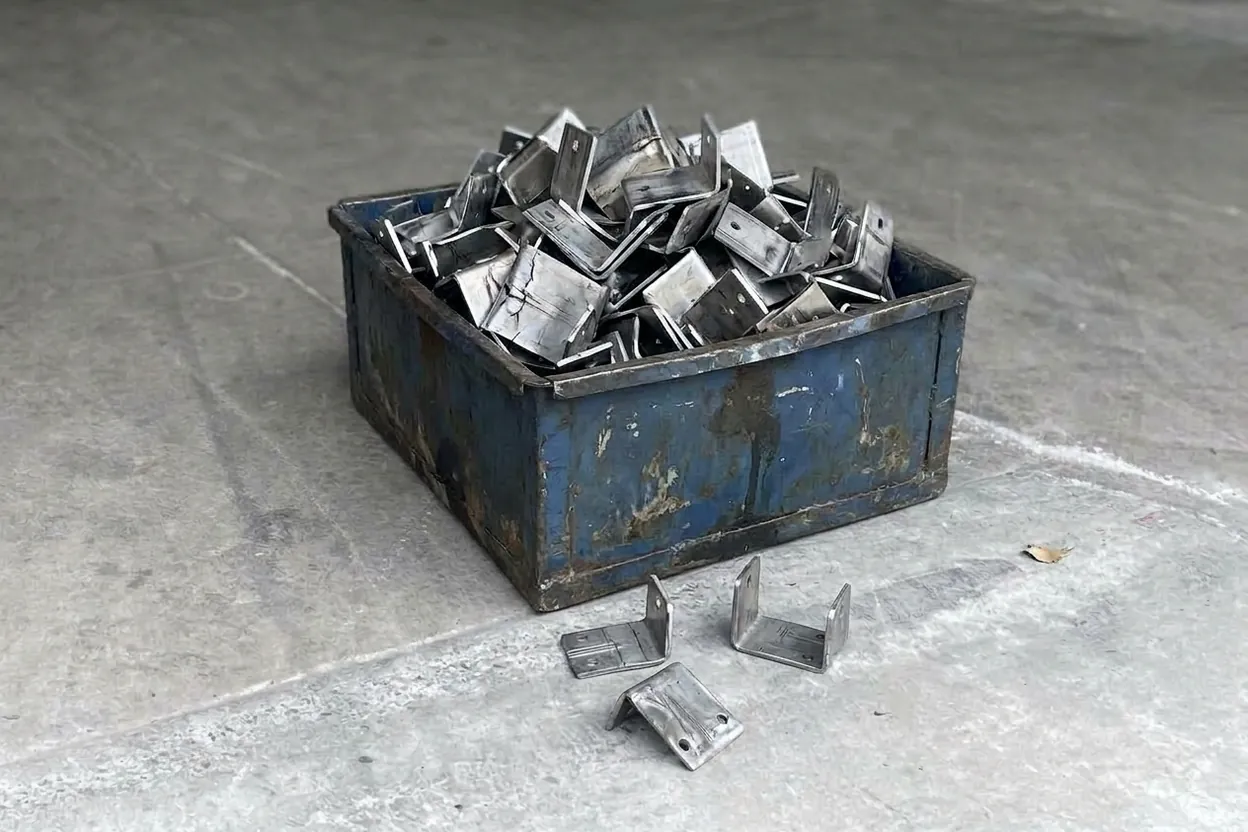
A part that fails at your assembly bench doesn’t cost you the part. It costs the part, plus the assembly time already spent on it, plus the stoppage while you wait for a replacement, plus the premium to re-run a small batch out of sequence. A 20% saving on a part that’s wrong 1-in-10 was never a saving.
Cheap because something’s missing
Sometimes the low quote is low because a step hasn’t happened yet. Nobody checked the file against how it’ll actually be cut and bent, so the DFM problems are still in there — waiting to surface as a change order, a scrapped first run, or a "that’ll be extra" once the job is already committed. The work doesn’t disappear because it wasn’t quoted. It just moves to a worse moment to find it.
“You can pay for the design review now, or pay for it in scrap later. It’s the same review — the later one just costs more.”
Late is a line item too
The quote that’s cheap but three weeks slower has a price you won’t see on it: your project waiting, your customer waiting, your cash tied up in a job that isn’t shipping. On the parts that gate everything downstream, a fast, right quote beats a cheap, slow one on total cost almost every time — even when the sticker says otherwise.
Design and CAD/CAM programming at LASER Tuấn Thịnh.
All notes by Khang →Keep reading
All notes →Want a quote you can trust?
Every file we price is checked by hand first — so the number you approve is the number you pay, not the start of a negotiation.