'/%3e%3crect%20x='-83'%20y='270'%20width='356'%20height='136'%20fill='%23FF6600'/%3e%3cpath%20d='M564%20260Q616%20260%20648.5%20277.0Q681%20294%20697.5%20311.5Q714%20329%20716%20333H724V270H895V800H724V737H716Q714%20741%20697.5%20759.0Q681%20777%20648.5%20793.5Q616%20810%20564%20810Q506%20810%20463.0%20786.5Q420%20763%20391.0%20723.5Q362%20684%20348.0%20635.0Q334%20586%20334%20535Q334%20484%20348.0%20435.0Q362%20386%20391.0%20346.5Q420%20307%20463.0%20283.5Q506%20260%20564%20260ZM618%20397Q581%20397%20556.0%20417.5Q531%20438%20519.0%20469.5Q507%20501%20507%20535Q507%20569%20519.0%20600.5Q531%20632%20556.0%20652.5Q581%20673%20618%20673Q655%20673%20679.5%20652.5Q704%20632%20716.5%20600.5Q729%20569%20729%20535Q729%20501%20716.5%20469.5Q704%20438%20679.5%20417.5Q655%20397%20618%20397Z'%20fill='%23FFFFFF'/%3e%3cpath%20d='M1329%20810Q1278%20810%201245.0%20793.0Q1212%20776%201196.0%20758.5Q1180%20741%201178%20737H1170V800H999V40H1170V333H1178Q1180%20329%201196.0%20311.0Q1212%20293%201245.0%20276.5Q1278%20260%201329%20260Q1388%20260%201431.0%20283.5Q1474%20307%201502.5%20346.5Q1531%20386%201545.5%20435.0Q1560%20484%201560%20535Q1560%20586%201545.5%20635.0Q1531%20684%201502.5%20723.5Q1474%20763%201431.0%20786.5Q1388%20810%201329%20810ZM1276%20673Q1313%20673%201338.0%20652.5Q1363%20632%201375.0%20600.5Q1387%20569%201387%20535Q1387%20501%201375.0%20469.5Q1363%20438%201338.0%20417.5Q1313%20397%201276%20397Q1239%20397%201214.0%20417.5Q1189%20438%201177.0%20469.5Q1165%20501%201165%20535Q1165%20569%201177.0%20600.5Q1189%20632%201214.0%20652.5Q1239%20673%201276%20673Z'%20fill='%23FFFFFF'/%3e%3cpath%20d='M1664%20800V270H1835V800Z'%20fill='%23FFFFFF'/%3e%3crect%20x='1664.0'%20y='40'%20width='171'%20height='171'%20fill='%23FF6600'/%3e%3cpath%20d='M1945%20800V270H2116V345H2121Q2131%20329%202148.5%20309.0Q2166%20289%202195.5%20274.5Q2225%20260%202269%20260Q2333%20260%202371.5%20289.0Q2410%20318%202427.0%20362.5Q2444%20407%202444%20454V800H2273V486Q2273%20452%202255.0%20425.5Q2237%20399%202196%20399Q2151%20399%202133.5%20428.5Q2116%20458%202116%20493V800Z'%20fill='%23FFFFFF'/%3e%3cpath%20d='M2792%20810Q2724%20810%202684.5%20789.0Q2645%20768%202627.0%20736.5Q2609%20705%202604.0%20672.5Q2599%20640%202599%20617V406H2511V270H2599V139H2770V270H2878V406H2770V612Q2770%20642%202786.5%20659.5Q2803%20677%202843%20677Q2860%20677%202873.0%20674.5Q2886%20672%202886%20672V800Q2886%20800%202857.5%20805.0Q2829%20810%202792%20810Z'%20fill='%23FFFFFF'/%3e%3cpath%20d='M3236%20810Q3165%20810%203113.0%20786.5Q3061%20763%203026.5%20723.5Q2992%20684%202975.5%20635.0Q2959%20586%202959%20534Q2959%20484%202975.0%20435.0Q2991%20386%203024.0%20346.5Q3057%20307%203108.5%20283.5Q3160%20260%203231%20260Q3307%20260%203364.5%20292.5Q3422%20325%203454.5%20387.5Q3487%20450%203487%20539V579H3131Q3134%20620%203160.5%20650.5Q3187%20681%203236%20681Q3273%20681%203292.5%20667.5Q3312%20654%203319.0%20640.0Q3326%20626%203326%20626H3483Q3483%20626%203478.0%20644.5Q3473%20663%203459.0%20690.5Q3445%20718%203418.0%20745.5Q3391%20773%203346.5%20791.5Q3302%20810%203236%20810ZM3130%20480H3323Q3321%20433%203294.5%20409.0Q3268%20385%203228%20385Q3189%20385%203161.5%20409.0Q3134%20433%203130%20480Z'%20fill='%23FFFFFF'/%3e%3cpath%20d='M3585%20800V40H3756V800Z'%20fill='%23FFFFFF'/%3e%3c/svg%3e)
Why one job shop beats five suppliers
Cut here, bend there, weld somewhere else, coat down the road — every handoff is a lead time, a markup and a place for the blame to hide. The case for one supplier.
The five-vendor tax
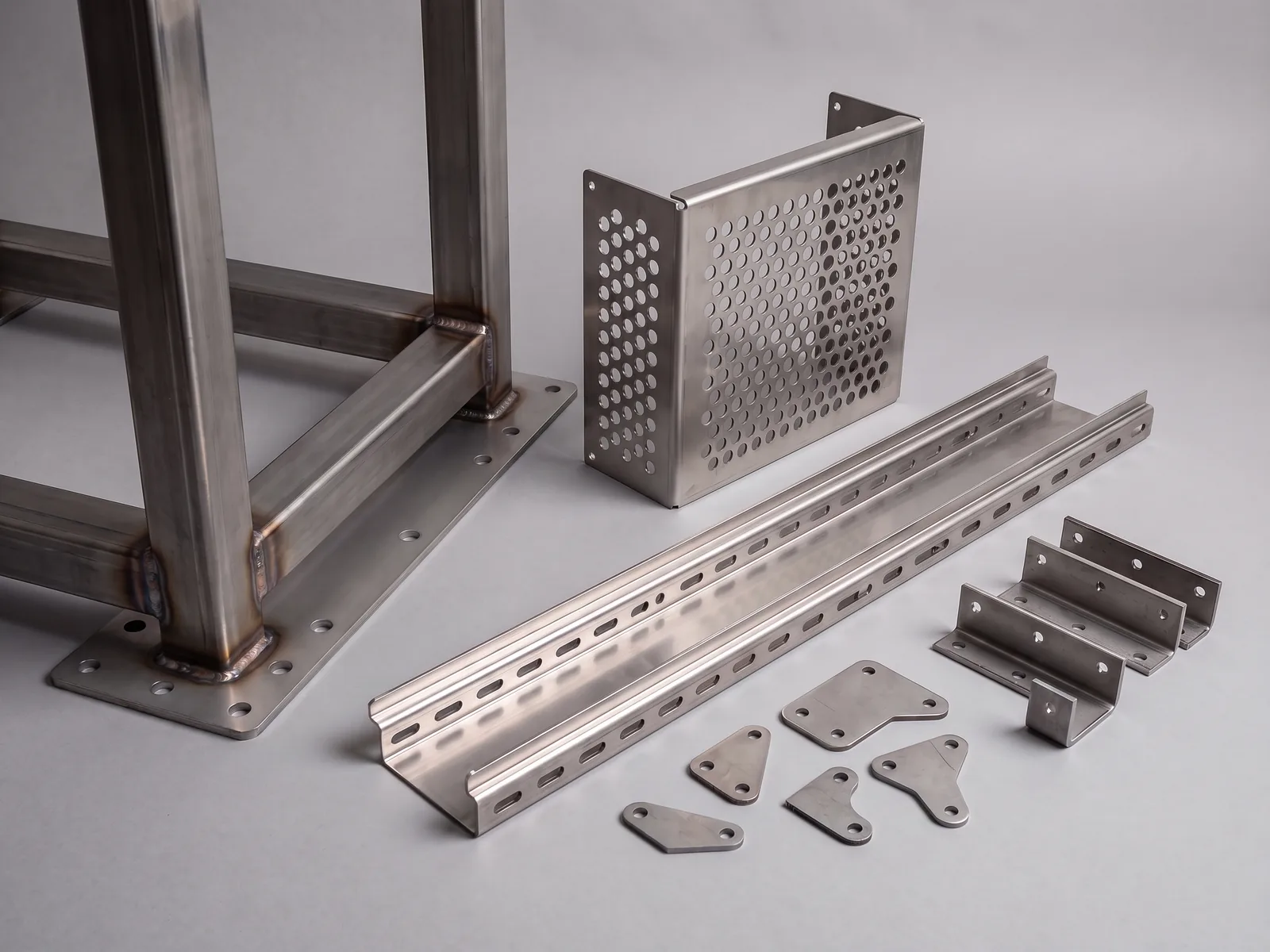
A bracket that gets laser-cut, folded, welded and powder-coated is a simple part. Made across four suppliers, it becomes a project: four purchase orders, four queues, four minimum-order charges, and four legs of transport as the part crosses the city and back before it’s finished.
Every one of those handoffs is time you pay for and can’t see. The part sits on a shelf waiting for the next vendor to have capacity — and each shelf is a day your "three-week" job quietly isn’t moving.
Where the fault hides
The real cost shows up when something doesn’t fit. The bent part is a degree out, the weldment won’t sit square, the coating’s masked wrong. Across five vendors, everyone points at the last person who touched it: the welder blames the bender, the bender blames the cutter, and you’re the one holding the parts and the phone.
Tolerances don’t add up in your favour
Every time a part changes hands, it gets re-clamped and re-referenced off a slightly different edge. Those small differences stack. A cut, a bend and a weld each held to ±0.2 mm can drift to ±0.6 mm by the time they’re combined — and the tighter your assembly, the more that hurts. Keep the cut, the bend and the weld in one place and we hold the same datum right through, so the error never compounds across a loading dock. For the coating, we send the parts to our coating partner and collect them, all under the same order.
“A supply chain is just a tolerance stackup with invoices attached. Shorten the chain and both get smaller.”
When many vendors is the right call
This isn’t absolute. At very high volume, a dedicated specialist for a single process can beat a generalist on unit price — and some finishes (hot-dip galvanising, hard anodising, specialist plating) genuinely live outside a fab shop, so we sub them out and manage the handoff for you, just as we do for powder coating. The point isn’t "never split the work." It’s that the split should be a decision you make for a reason, not the default you inherit because no one shop could do it all.
Design and CAD/CAM programming at LASER Tuấn Thịnh.
All notes by Khang →Keep reading
All notes →One part, one purchase order.
Send us the assembly — we cut, bend and weld it under one roof, handle the powder coating through our partner, and one person owns the result.