'/%3e%3crect%20x='-83'%20y='270'%20width='356'%20height='136'%20fill='%23FF6600'/%3e%3cpath%20d='M564%20260Q616%20260%20648.5%20277.0Q681%20294%20697.5%20311.5Q714%20329%20716%20333H724V270H895V800H724V737H716Q714%20741%20697.5%20759.0Q681%20777%20648.5%20793.5Q616%20810%20564%20810Q506%20810%20463.0%20786.5Q420%20763%20391.0%20723.5Q362%20684%20348.0%20635.0Q334%20586%20334%20535Q334%20484%20348.0%20435.0Q362%20386%20391.0%20346.5Q420%20307%20463.0%20283.5Q506%20260%20564%20260ZM618%20397Q581%20397%20556.0%20417.5Q531%20438%20519.0%20469.5Q507%20501%20507%20535Q507%20569%20519.0%20600.5Q531%20632%20556.0%20652.5Q581%20673%20618%20673Q655%20673%20679.5%20652.5Q704%20632%20716.5%20600.5Q729%20569%20729%20535Q729%20501%20716.5%20469.5Q704%20438%20679.5%20417.5Q655%20397%20618%20397Z'%20fill='%23FFFFFF'/%3e%3cpath%20d='M1329%20810Q1278%20810%201245.0%20793.0Q1212%20776%201196.0%20758.5Q1180%20741%201178%20737H1170V800H999V40H1170V333H1178Q1180%20329%201196.0%20311.0Q1212%20293%201245.0%20276.5Q1278%20260%201329%20260Q1388%20260%201431.0%20283.5Q1474%20307%201502.5%20346.5Q1531%20386%201545.5%20435.0Q1560%20484%201560%20535Q1560%20586%201545.5%20635.0Q1531%20684%201502.5%20723.5Q1474%20763%201431.0%20786.5Q1388%20810%201329%20810ZM1276%20673Q1313%20673%201338.0%20652.5Q1363%20632%201375.0%20600.5Q1387%20569%201387%20535Q1387%20501%201375.0%20469.5Q1363%20438%201338.0%20417.5Q1313%20397%201276%20397Q1239%20397%201214.0%20417.5Q1189%20438%201177.0%20469.5Q1165%20501%201165%20535Q1165%20569%201177.0%20600.5Q1189%20632%201214.0%20652.5Q1239%20673%201276%20673Z'%20fill='%23FFFFFF'/%3e%3cpath%20d='M1664%20800V270H1835V800Z'%20fill='%23FFFFFF'/%3e%3crect%20x='1664.0'%20y='40'%20width='171'%20height='171'%20fill='%23FF6600'/%3e%3cpath%20d='M1945%20800V270H2116V345H2121Q2131%20329%202148.5%20309.0Q2166%20289%202195.5%20274.5Q2225%20260%202269%20260Q2333%20260%202371.5%20289.0Q2410%20318%202427.0%20362.5Q2444%20407%202444%20454V800H2273V486Q2273%20452%202255.0%20425.5Q2237%20399%202196%20399Q2151%20399%202133.5%20428.5Q2116%20458%202116%20493V800Z'%20fill='%23FFFFFF'/%3e%3cpath%20d='M2792%20810Q2724%20810%202684.5%20789.0Q2645%20768%202627.0%20736.5Q2609%20705%202604.0%20672.5Q2599%20640%202599%20617V406H2511V270H2599V139H2770V270H2878V406H2770V612Q2770%20642%202786.5%20659.5Q2803%20677%202843%20677Q2860%20677%202873.0%20674.5Q2886%20672%202886%20672V800Q2886%20800%202857.5%20805.0Q2829%20810%202792%20810Z'%20fill='%23FFFFFF'/%3e%3cpath%20d='M3236%20810Q3165%20810%203113.0%20786.5Q3061%20763%203026.5%20723.5Q2992%20684%202975.5%20635.0Q2959%20586%202959%20534Q2959%20484%202975.0%20435.0Q2991%20386%203024.0%20346.5Q3057%20307%203108.5%20283.5Q3160%20260%203231%20260Q3307%20260%203364.5%20292.5Q3422%20325%203454.5%20387.5Q3487%20450%203487%20539V579H3131Q3134%20620%203160.5%20650.5Q3187%20681%203236%20681Q3273%20681%203292.5%20667.5Q3312%20654%203319.0%20640.0Q3326%20626%203326%20626H3483Q3483%20626%203478.0%20644.5Q3473%20663%203459.0%20690.5Q3445%20718%203418.0%20745.5Q3391%20773%203346.5%20791.5Q3302%20810%203236%20810ZM3130%20480H3323Q3321%20433%203294.5%20409.0Q3268%20385%203228%20385Q3189%20385%203161.5%20409.0Q3134%20433%203130%20480Z'%20fill='%23FFFFFF'/%3e%3cpath%20d='M3585%20800V40H3756V800Z'%20fill='%23FFFFFF'/%3e%3c/svg%3e)
A weldment from flat: cut, bend, fixture, weld, dress, coat
A welded frame is a sequence, and the order matters as much as the welds. Follow one from flat blanks to a coated assembly — and see why the fixture is built before the arc strikes.
Cut the parts
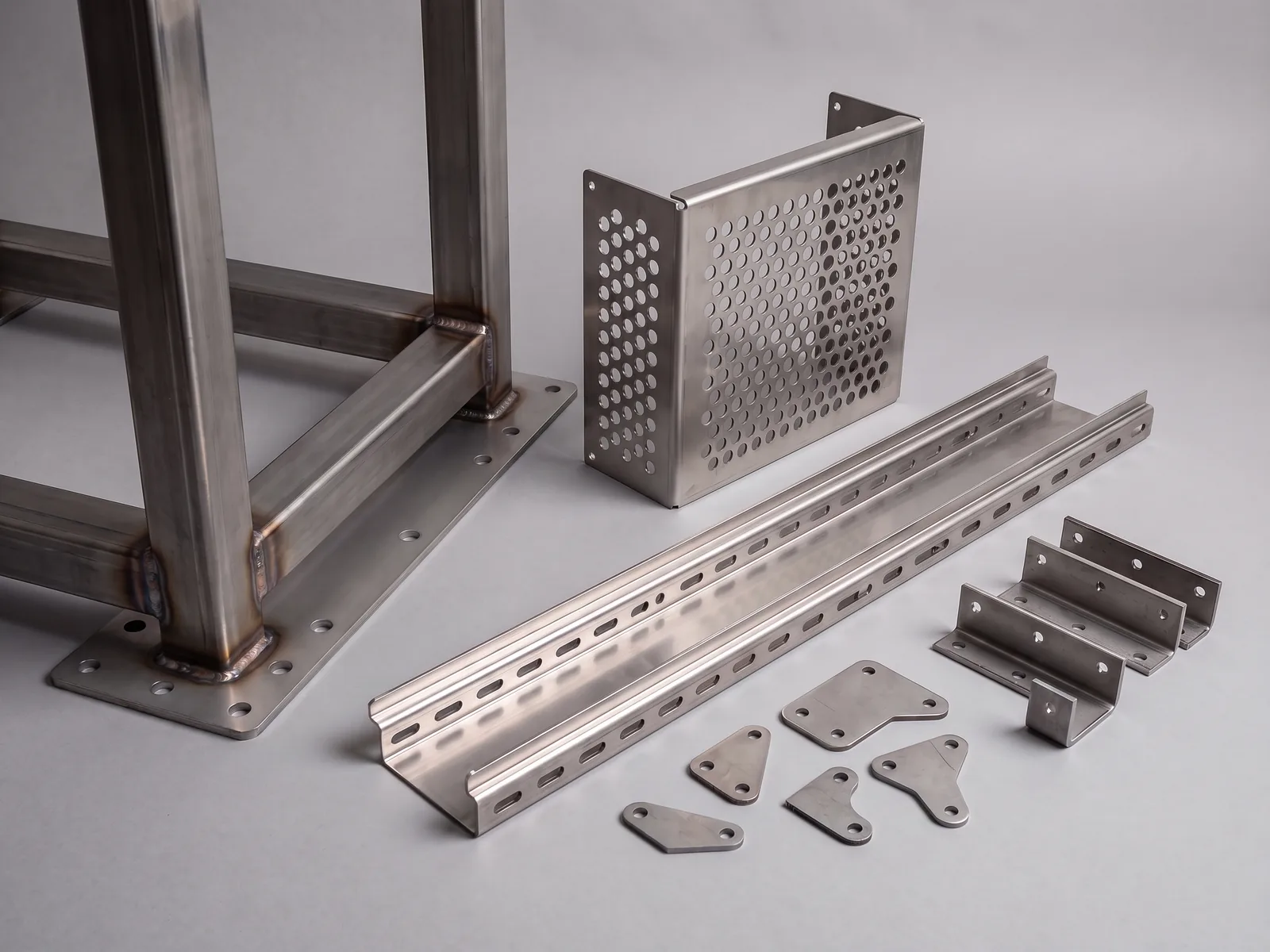
STATION · FIBER LASEREvery part of the weldment is cut on the laser from one set of files — which means every edge that has to meet another was cut by the same machine to the same numbers. That’s the quiet advantage of one shop: the parts fit each other because they came from one source, not five, so the fit-up is right before anyone picks up a torch.
Fold what needs folding
STATION · PRESS BRAKEAny part that’s a folded shape rather than a flat plate gets bent now, while it’s still a single easy-to-handle piece. Folding before welding also does structural work for free: a folded lip or flange stiffens a panel so the finished frame needs fewer welds and warps less under the heat that’s coming.
Build the fixture first
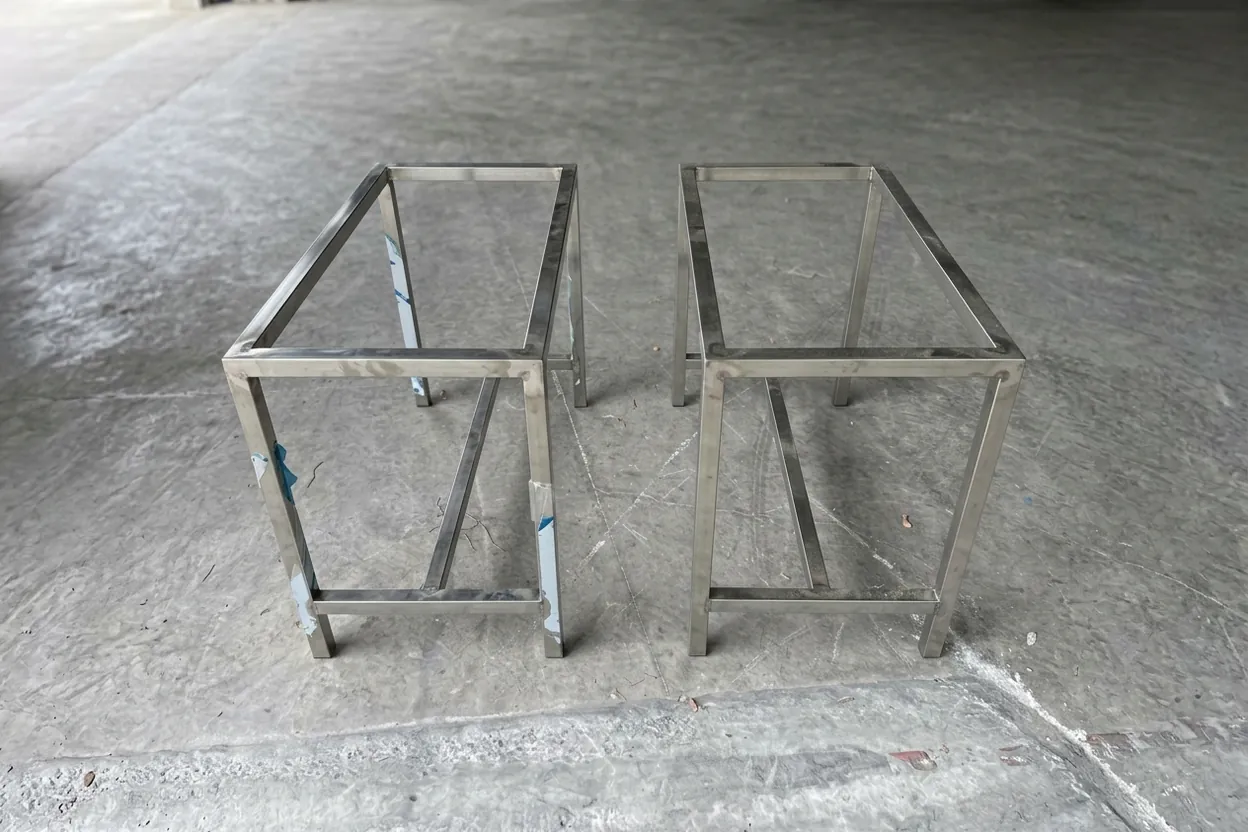
STATION · JIGBefore a single joint is welded, the parts are set into a fixture — a jig that holds every piece in its exact place and square to the others. This is the step that decides whether the weldment comes out true. Weld freehand and the first bead pulls the whole assembly out of shape; weld in a fixture and the heat has to fight the clamps, not your tolerances.
Tack, then weld out
STATION · WELD BAYThe assembly is tacked together first — small welds that hold everything in position — then welded out in a planned sequence that balances the heat across the part, so it doesn’t all pull one way. TIG for the thin and the visible, handheld laser for speed and heavier sections, stainless back-purged so the far side of the seam stays clean. The sequence is as deliberate as the welds themselves.
Distortion isn’t bad luck — it’s heat put in the wrong order. Plan the sequence and the frame stays where you left it.NOTE TAG · TAPED TO THE NESTING PC
Dress the welds
STATION · GRINDINGOut of the fixture, the welds are dressed to whatever the job asks for — ground flush and blended where the part shows or gets handled, left as strong structural beads where it doesn’t. This is where "welded" becomes "finished": the difference between a fabrication and a product is usually the half-hour spent here.
Finish and out
STATION · PARTNER POWDER LINELast, we send the whole assembly to our coating partner, where it is blasted, pre-treated and powder-coated as one piece — so the colour is even across every part and there are no bare welds left to rust. We specify the finish and colour and collect it when it’s done, so it still leaves as a single finished weldment: cut, folded, fixtured, welded, dressed and coated, on one order, with one contact.
- Cut All parts from one set of files, edges that match.
- Bend Fold before welding — it stiffens and simplifies.
- Fixture Hold everything square before any heat goes in.
- Weld Tack, then weld out in a heat-balanced sequence.
- Dress Grind and blend where it shows.
- Coat Finish as one piece at our coating partner — even colour, no bare welds.
Building a weldment?