'/%3e%3crect%20x='-83'%20y='270'%20width='356'%20height='136'%20fill='%23FF6600'/%3e%3cpath%20d='M564%20260Q616%20260%20648.5%20277.0Q681%20294%20697.5%20311.5Q714%20329%20716%20333H724V270H895V800H724V737H716Q714%20741%20697.5%20759.0Q681%20777%20648.5%20793.5Q616%20810%20564%20810Q506%20810%20463.0%20786.5Q420%20763%20391.0%20723.5Q362%20684%20348.0%20635.0Q334%20586%20334%20535Q334%20484%20348.0%20435.0Q362%20386%20391.0%20346.5Q420%20307%20463.0%20283.5Q506%20260%20564%20260ZM618%20397Q581%20397%20556.0%20417.5Q531%20438%20519.0%20469.5Q507%20501%20507%20535Q507%20569%20519.0%20600.5Q531%20632%20556.0%20652.5Q581%20673%20618%20673Q655%20673%20679.5%20652.5Q704%20632%20716.5%20600.5Q729%20569%20729%20535Q729%20501%20716.5%20469.5Q704%20438%20679.5%20417.5Q655%20397%20618%20397Z'%20fill='%23FFFFFF'/%3e%3cpath%20d='M1329%20810Q1278%20810%201245.0%20793.0Q1212%20776%201196.0%20758.5Q1180%20741%201178%20737H1170V800H999V40H1170V333H1178Q1180%20329%201196.0%20311.0Q1212%20293%201245.0%20276.5Q1278%20260%201329%20260Q1388%20260%201431.0%20283.5Q1474%20307%201502.5%20346.5Q1531%20386%201545.5%20435.0Q1560%20484%201560%20535Q1560%20586%201545.5%20635.0Q1531%20684%201502.5%20723.5Q1474%20763%201431.0%20786.5Q1388%20810%201329%20810ZM1276%20673Q1313%20673%201338.0%20652.5Q1363%20632%201375.0%20600.5Q1387%20569%201387%20535Q1387%20501%201375.0%20469.5Q1363%20438%201338.0%20417.5Q1313%20397%201276%20397Q1239%20397%201214.0%20417.5Q1189%20438%201177.0%20469.5Q1165%20501%201165%20535Q1165%20569%201177.0%20600.5Q1189%20632%201214.0%20652.5Q1239%20673%201276%20673Z'%20fill='%23FFFFFF'/%3e%3cpath%20d='M1664%20800V270H1835V800Z'%20fill='%23FFFFFF'/%3e%3crect%20x='1664.0'%20y='40'%20width='171'%20height='171'%20fill='%23FF6600'/%3e%3cpath%20d='M1945%20800V270H2116V345H2121Q2131%20329%202148.5%20309.0Q2166%20289%202195.5%20274.5Q2225%20260%202269%20260Q2333%20260%202371.5%20289.0Q2410%20318%202427.0%20362.5Q2444%20407%202444%20454V800H2273V486Q2273%20452%202255.0%20425.5Q2237%20399%202196%20399Q2151%20399%202133.5%20428.5Q2116%20458%202116%20493V800Z'%20fill='%23FFFFFF'/%3e%3cpath%20d='M2792%20810Q2724%20810%202684.5%20789.0Q2645%20768%202627.0%20736.5Q2609%20705%202604.0%20672.5Q2599%20640%202599%20617V406H2511V270H2599V139H2770V270H2878V406H2770V612Q2770%20642%202786.5%20659.5Q2803%20677%202843%20677Q2860%20677%202873.0%20674.5Q2886%20672%202886%20672V800Q2886%20800%202857.5%20805.0Q2829%20810%202792%20810Z'%20fill='%23FFFFFF'/%3e%3cpath%20d='M3236%20810Q3165%20810%203113.0%20786.5Q3061%20763%203026.5%20723.5Q2992%20684%202975.5%20635.0Q2959%20586%202959%20534Q2959%20484%202975.0%20435.0Q2991%20386%203024.0%20346.5Q3057%20307%203108.5%20283.5Q3160%20260%203231%20260Q3307%20260%203364.5%20292.5Q3422%20325%203454.5%20387.5Q3487%20450%203487%20539V579H3131Q3134%20620%203160.5%20650.5Q3187%20681%203236%20681Q3273%20681%203292.5%20667.5Q3312%20654%203319.0%20640.0Q3326%20626%203326%20626H3483Q3483%20626%203478.0%20644.5Q3473%20663%203459.0%20690.5Q3445%20718%203418.0%20745.5Q3391%20773%203346.5%20791.5Q3302%20810%203236%20810ZM3130%20480H3323Q3321%20433%203294.5%20409.0Q3268%20385%203228%20385Q3189%20385%203161.5%20409.0Q3134%20433%203130%20480Z'%20fill='%23FFFFFF'/%3e%3cpath%20d='M3585%20800V40H3756V800Z'%20fill='%23FFFFFF'/%3e%3c/svg%3e)
Reading a mill cert (EN 10204 3.1): what every field means
The certificate that comes with your steel is a promise, in numbers, about what it actually is. A field-by-field read of the 3.1 cert — the type codes, the chemistry, and the traceability that matters when it matters.
What a mill cert is
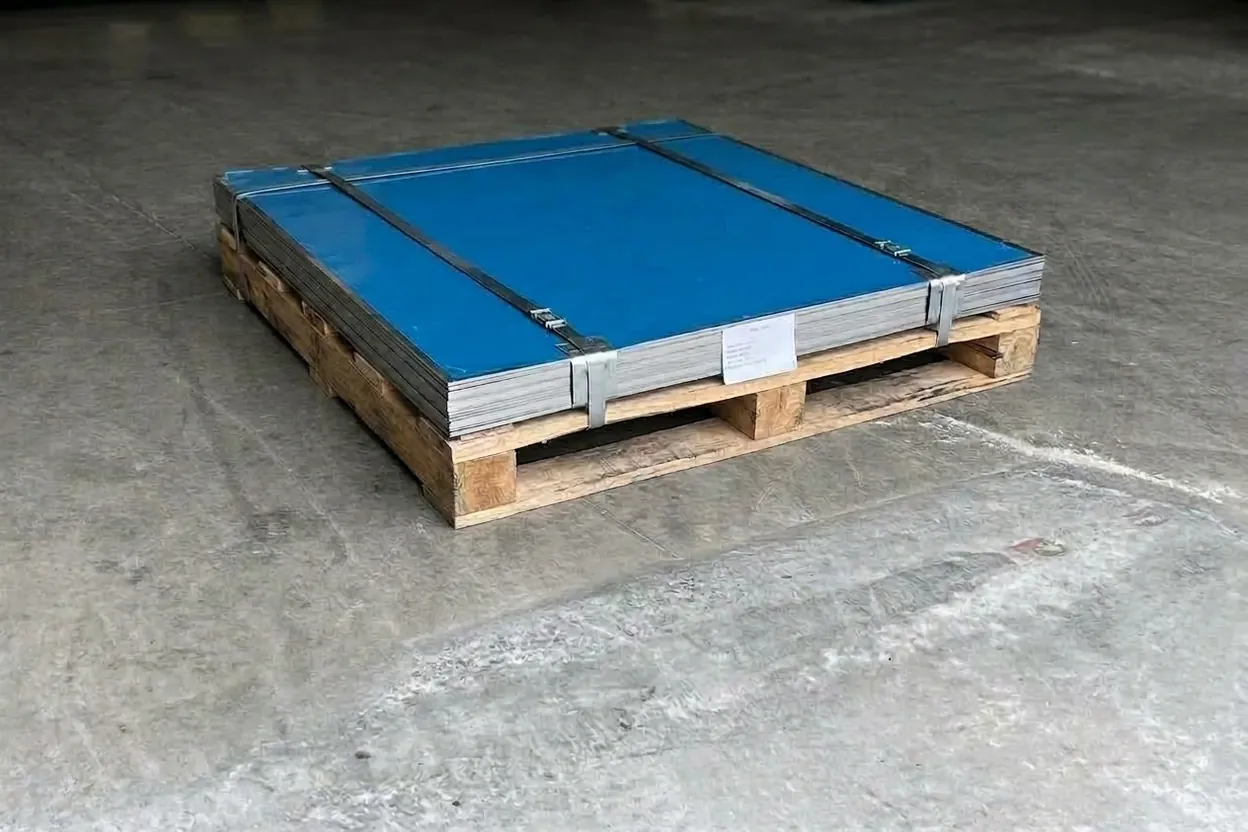
A mill certificate (or "mill cert") is the document the steel mill issues with a batch of material, stating what it is and proving it was tested. For most fabrication it sits quietly in a folder — but the moment a part is structural, safety-critical, or has to satisfy an auditor, the cert is what turns "it’s 304 stainless" from a claim into a record. It answers one question with evidence: is this metal actually what the order said?
The type code — how strong the promise is
EN 10204 defines a handful of certificate types, and they’re not equal. The number tells you who did the testing and how specific it is to your metal. The one you’ll ask for by name is 3.1.
| TYPE | WHAT IT CERTIFIES | TESTED ON |
|---|---|---|
| 2.1 | Conforms to order | Not tested, just declared |
| 2.2 | Conforms, with test data | General production, not your batch |
| 3.1 | Conforms, actual results | Your specific heat/cast |
| 3.2 | 3.1, countersigned | Your heat + an independent inspector |
Rule of thumb: 3.1 is the workhorse for traceable fabrication. 3.2 is for when a third party must witness it.
The heat number — the thread that ties it together
The single most important field is the heat (or cast) number — the batch ID for the exact pour of molten steel your material came from. It’s stamped or printed on the material and repeated on the cert, and it’s what lets anyone, years later, trace a finished part back to a tested batch. Lose the link between the stamp and the paper and a 3.1 cert is just a nice document about some other steel.
The chemistry — what it’s made of
The chemical analysis lists the percentage of each element in the alloy — carbon, chromium, nickel, molybdenum, and the rest — measured on your heat. It’s how you confirm a stainless is really 316 and not 304 wearing the same finish, and it’s what a welding engineer reads to choose the right filler. The numbers should sit inside the ranges the grade’s standard allows.
The mechanicals — how it behaves
The mechanical section is the physical test data: yield strength (where it stops springing back), tensile strength (where it breaks), and elongation (how much it stretches first — a proxy for how well it’ll bend without cracking). For a structural or formed part, these are the numbers the design actually relies on.
| FIELD | MEANS | MATTERS FOR |
|---|---|---|
| Yield (Rp0.2) | Onset of permanent bend | Structural load, forming |
| Tensile (Rm) | Ultimate strength | Safety margin |
| Elongation (A%) | Ductility before break | Bending, deep forming |
A low elongation figure is a quiet warning that a grade may crack on a tight bend — worth reading before you fold it.
What we do with it
When a job calls for certified material, we buy to the grade and cert type you specify, keep the heat number tied to your parts through the shop, and pass the cert on with delivery. If your order doesn’t mention certs, we don’t assume — so if traceability matters for your part, say so up front, because a cert can’t be issued backwards for metal that’s already cut.
- 01 The grade and standard e.g. "304 to EN 10088" — the cert is checked against it.
- 02 The cert type 3.1 for normal traceability; 3.2 if a third party must witness.
- 03 That you need it — before we cut Certified material is a sourcing decision made at the start, not a document added at the end.
Need certified material? Tell us the grade and standard your job requires — we’ll supply to it and pass the mill cert through with the parts.